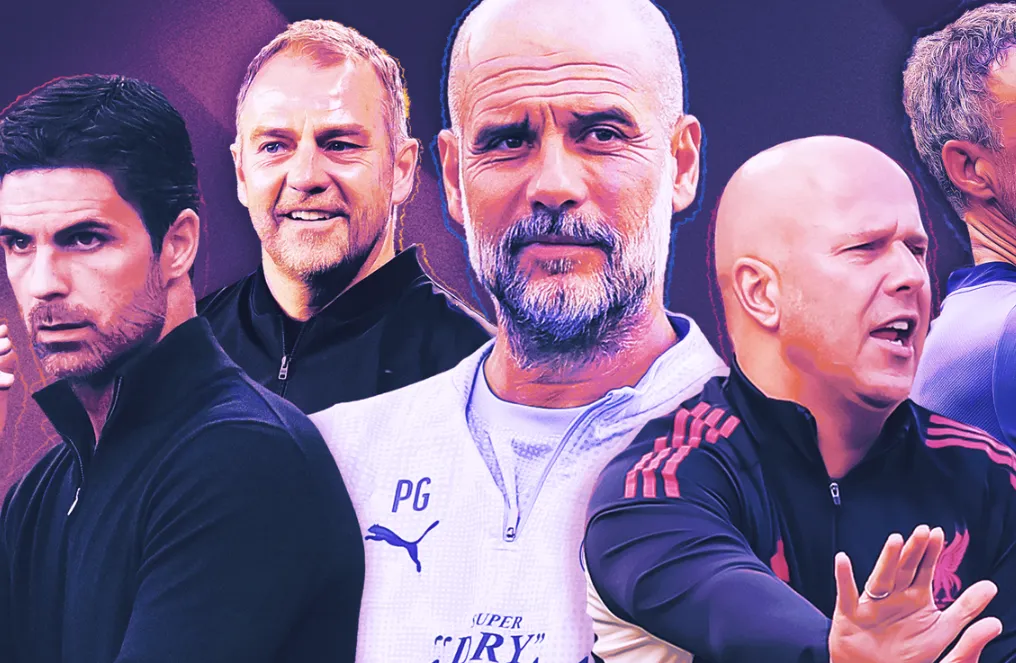
The landscape of European football management has never been more dynamic. With tactical revolutions, generational shifts in squad building, and the relentless pressure of instant results, identifying the very best minds in the dugout is a debate that ignites passion among fans everywhere. From the elite giants of the Premier League and La Liga to the tactical innovators in Serie A and the Bundesliga, the current crop of managers offers a fascinating blend of experience, youth, and cutting-edge methodology. At Jaya9, we’ve analyzed recent trophy hauls, tactical innovations, squad development, and consistency to bring you the definitive ranking of the top 30 men’s club managers in Europe right now.
This list isn’t just about silverware; it’s about influence, adaptability, and the ability to extract maximum potential from a squad. A manager’s capacity to evolve his system, nurture young talent, and handle the psychological demands of a modern dressing room are all crucial factors. We’ve seen legendary figures cement their legacies while new, exciting minds have emerged to challenge the old guard. Join us as we break down the thirty tacticians currently shaping the beautiful game.
The Elite of the Elite: The Top 5
Pep Guardiola (Manchester City)
It’s almost impossible to start this list with anyone else. Pep Guardiola continues to redefine what is possible in the modern game. His Manchester City side, the reigning Premier League champions and Champions League winners, operates with a level of positional play and tactical fluidity that leaves opponents bewildered. The integration of a player like Erling Haaland into his intricate system showed his genius for adaptation, proving he isn’t a one-dimensional ideologue. His relentless drive for perfection sets a standard that few can match.
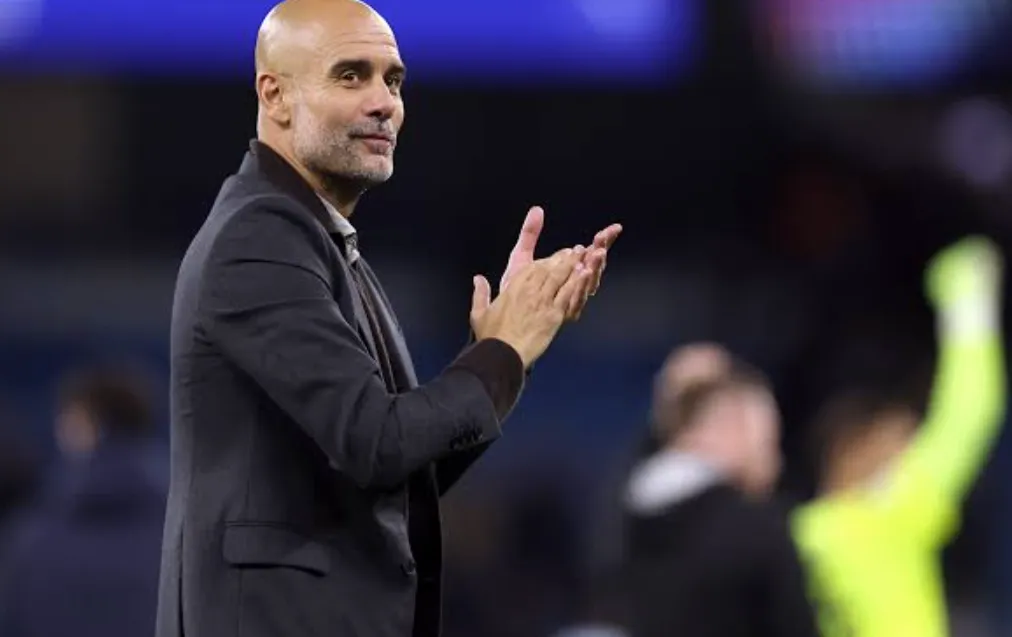
Beyond the trophies, Guardiola’s influence on the next generation of coaches is profound. His principles of building from the back, controlling the midfield, and creating overloads in wide areas have become the textbook for many. While the Champions League win removed the last major question mark over his City tenure, his true legacy lies in the sustained dominance he has achieved in one of the world’s most competitive leagues. He is the ultimate benchmark.
Xabi Alonso (Bayer Leverkusen)
The emergence of Xabi Alonso has been one of the most captivating stories in recent football history. In just over a year, he transformed Bayer Leverkusen from a mid-table side into undefeated Bundesliga champions and DFB-Pokal winners, shattering Bayern Munich’s stranglehold on the league. His football is a beautiful fusion of Guardiola’s possession-based control and the direct, vertical attacking style synonymous with his former manager, Jürgen Klopp. The “Neverkusen” tag was obliterated with a mentality of steel.
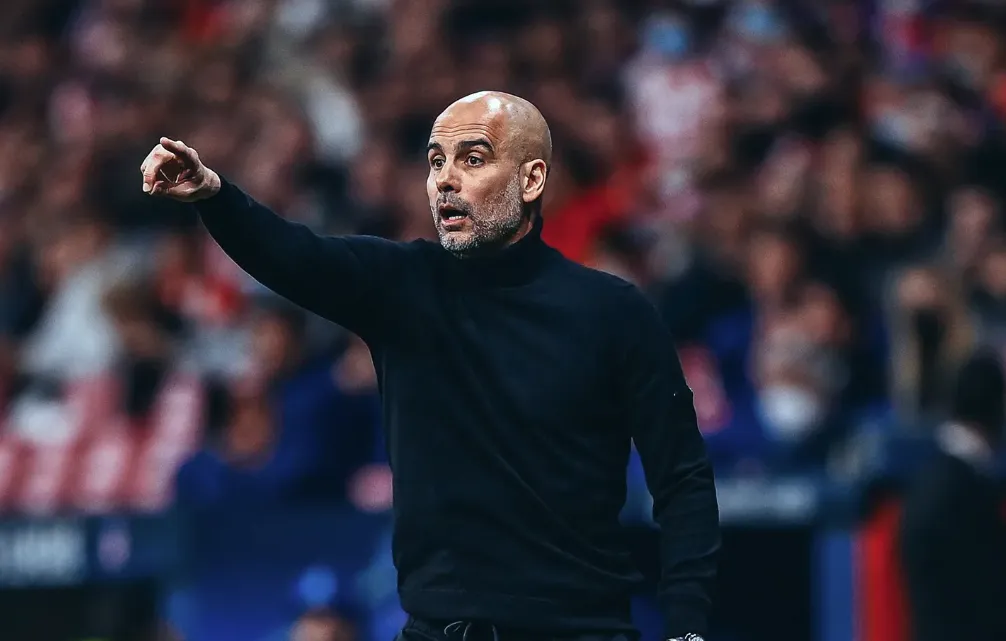
Alonso’s ability to develop players, such as turning Florian Wirtz into a world-class talent and revitalizing Granit Xhaka’s career, speaks volumes about his man-management. The way his team could control a game’s tempo one moment and then explode into devastating counter-attacks the next has made them a joy to watch. His decision to remain at Leverkusen, despite overtures from Liverpool and Bayern, shows a rare intelligence and patience. He is the hottest property in management.
Jürgen Klopp (Liverpool)
Despite leaving Liverpool at the end of last season, Jürgen Klopp’s legacy and tactical impact are so immense that he remains in the top tier of this discussion. The “heavy metal football” he perfected at Anfield, characterized by relentless pressing, lightning-fast transitions, and an unbreakable emotional connection with the club, has earned him legendary status. Winning the Premier League, Champions League, and every other major trophy, he built a team that was defined by its collective spirit.
Klopp’s genius lies not just in tactical systems but in his ability to build a culture. He turned Liverpool into a global force that could attract top talent and challenge for honors year after year. The gegenpressing philosophy he championed has been widely imitated across Europe. As he takes a well-deserved sabbatical, the football world eagerly awaits his return. His impact on the sport is measured in the way he made the impossible possible.
Carlo Ancelotti (Real Madrid)
Carlo Ancelotti is the master of man-management and tactical pragmatism. His greatest strength lies in his ability to build a harmonious dressing room and create a system that maximizes the talents of stars like Vinicius Jr., Jude Bellingham, and the legendary Karim Benzema (until his departure). Winning his fifth Champions League title as a manager, a record, is a testament to his unmatched ability to navigate high-pressure knockout football. His calm demeanor is the perfect antidote to the circus that often surrounds Real Madrid.
Ancelotti doesn’t impose a rigid system; he builds a flexible framework. He brilliantly solved the puzzle of integrating Bellingham by deploying him as a false-nine, a move that won games. His “carrot and stick” approach, where he gives players freedom but demands defensive responsibility, is a masterclass in elite management. While his methods may not be as overtly “systematic” as Guardiola’s, the results are undeniable. He is the ultimate winner.
Mikel Arteta (Arsenal)
Mikel Arteta has orchestrated a remarkable transformation at Arsenal, turning a team that was in disarray into genuine Premier League title contenders. His meticulous tactical approach, heavily influenced by his time under Guardiola, combines aggressive pressing, fluid attacking rotations, and a robust defensive structure. Building a young, hungry squad around leaders like Martin Ødegaard and Bukayo Saka, he has created a strong identity and a winning mentality.
Arteta’s impact goes beyond tactics; he has restored the club‘s culture and connection with the fans. The way Arsenal now controls games, dominates possession, and creates chances is a clear reflection of his coaching. While he is yet to win a Premier League title, his two successive second-place finishes and an FA Cup win show a clear upward trajectory. He has proven himself to be one of the most forward-thinking and demanding managers in Europe, and his project at the Emirates is far from finished.
The Masters and Innovators (6-15)
Simone Inzaghi (Inter Milan)
Simone Inzaghi has emerged from the shadow of Antonio Conte. His tactical flexibility, moving between a 3-5-2 and a 3-3-3-1, has made Inter a formidable force both domestically and in Europe. Reaching the Champions League final and winning the Serie A title (ahead of Conte’s Napoli) showcased his ability to build a team that is both defensively solid and potent in attack.
Luis Enrique (Paris Saint-Germain)
Despite a mixed start at PSG, Luis Enrique’s reputation as a tactical purist and winner is secure. His commitment to extreme possession-based football is unwavering. Guiding a transitional PSG side, now without its ‘galácticos,’ to Ligue 1 titles and a Champions League semi-final shows he is building a new culture. His development of young stars like Warren Zaïre-Emery proves his eye for talent.
Diego Simeone (Atlético Madrid)
The definition of ‘Cholismo’ remains one of the most unique and effective philosophies in football. Simeone’s ability to forge a team of warriors, defined by defensive resolve and counter-attacking venom, is unparalleled. Winning La Liga in 2021 against the mighty Barcelona and Real Madrid was his crowning achievement. While his style may not be aesthetically pleasing to all, his winning mentality is legendary.
Unai Emery (Aston Villa)
Unai Emery has rehabilitated his reputation spectacularly at Aston Villa. His tactical acumen, particularly in one-off cup matches and European competitions, is world-class. Leading Villa to the Champions League while dismantling top sides in the Premier League has been a masterclass in organization and tactical flexibility. He is a coach who lives and breathes match preparation.
Julian Nagelsmann (Germany NT – Focus on Club Potential)
While currently the German national team coach, Nagelsmann’s work with RB Leipzig and Bayern Munich places him firmly in the elite club category. His tactical voracity, constantly changing formations and game plans, marks him as a true intellectual of the game. His potential for his next club job is immense.
Roberto De Zerbi (Marseille)
The influence of Roberto De Zerbi cannot be overstated. His uniquely dangerous brand of football, involving playing through extreme pressure in and around his own box to create space, has been widely studied. After his impressive spell at Brighton, his move to Marseille has shown he can replicate his system in a high-pressure environment, confirming his status as a tactical innovator.
Gian Piero Gasperini (Atalanta)
The master of the 3-4-2-1 system and high-octane attacking football. Gasperini has turned Atalanta into a perennial Champions League qualifier and Europa League winner. His ability to develop attacking talent (from Papu Gomez to Lookman) and create a unique team identity that is greater than the sum of its parts is remarkable. He is an icon of modern attacking tactics.
Thiago Motta (Juventus)
One of the most exciting young managers in the world, Thiago Motta has taken the tactical concepts he learned under he who shall not be named and applied them to Bologna, achieving Champions League qualification. His football is incredibly complex, focusing on positional rotations and domination. His move to rebuild Juventus will be the ultimate test of his revolutionary ideas.
Edin Terzic (Dortmund)
Despite stepping down, Terzic’s leadership in guiding Dortmund to a Champions League final deserves immense respect. His ability to connect with the club’s soul and manage the emotional peaks and valleys of a young, talented squad was crucial. He is an excellent motivator and tactical planner for high-stakes knockout games.
Ruben Amorim (Sporting CP / Manchester United)
Ruben Amorim’s arrival at Manchester United, after winning two Primeira Liga titles with Sporting CP, marks the next chapter. His 3-4-3 system and ability to build a dynamic, aggressive pressing team is a proven success. How he adapts his philosophy to the Premier League will be one of the most fascinating storylines of the upcoming season.
The Rising Stars and Steady Hands (16-30)
Sean Dyche (Everton)
A master of his craft. Dyche’s ability to organize a defense, instil a work ethic, and grind out results to ensure Premier League survival is second to none. While not flashy, his tactical clarity in challenging circumstances is a form of genius.
Andoni Iraola (Bournemouth)
Iraola has quickly established his reputation at Bournemouth with an incredible high-pressing, high-intensity style. His teams are a nightmare to play against, and he has perfectly adapted his Basque coaching philosophy to the English game.
Paulo Fonseca (AC Milan)
Fonseca’s attacking philosophy has seen him build strong projects at Shakhtar, Roma, and Lille. His tactical approach emphasizes verticality and creativity from midfield. His tenure at Milan represents a new challenge in a top league.
Simone Inzaghi (Inter Milan) Already listed above
Vincenzo Italiano (Fiorentina)
Italiano has taken Fiorentina to two consecutive European finals. His high-energy, front-foot football and ability to overachieve with the resources available mark him as a top coaching talent.
Oliver Glasner (Crystal Palace)
After a stunning Europa League win with Eintracht Frankfurt, Glasner has brought his structured, vertical, and emotionally charged football to Crystal Palace. He is a very technically sharp coach.
Enzo Maresca (Chelsea)
Maresca earned his reputation by dominating the Championship with Leicester City. A Guardiola disciple, his possession-based system is complex and demanding. The pressure at Chelsea is immense, but his ideas are sound.
Arne Slot (Liverpool)
The successor to Klopp at Anfield. Slot’s data-driven, attacking football at Feyenoord saw him win the Eredivisie. His adaptation to the Premier League is a monumental task, but his tactical intelligence is undeniable.
Marco Silva (Fulham)
A consistently impressive Premier League manager. Silva’s Fulham plays attractive, attacking football while being well-organized. He has a knack for developing players and building a team that is greater than the sum of its parts.
Antonio Conte (Free Agent)
Despite his volatility, Conte’s record as a serial winner speaks for itself. He has won league titles in Italy and England, and his 3-4-3 wing-back system is a proven formula for instant success, even if it often burns out quickly.
Massimiliano Allegri (Free Agent)
A master of pragmatism and winning ugly. Allegri has six Serie A titles and two Champions League finals to his name. His ability to manage a game by “playing the match” is a rare and valuable skill.
Thomas Tuchel (England NT – Club Focus)
Tuchel’s tactical knowledge is elite. His Champions League win with Chelsea showcased his defensive mastery. While his time at Bayern was rocky, his ability to set up a team for a single knockout tie is phenomenal. His next club move will be critical.
Erik ten Hag (Manchester United)
His time at Manchester United was tumultuous, but his Ajax team was a masterpiece of modern football. Ten Hag’s dedication to a specific positional play and high-pressing system is admirable. His rebuild project failed, but his coaching ideas remain highly respected.
Mauricio Pochettino (USA NT – Club Focus)
A world-class squad builder and man-manager. His work at Tottenham and PSG proves he can develop players and create an identity. His high-pressing, intense style is a proven formula for building a team.
Rúben Amorim (Sporting CP / Manchester United) Already listed above
Vladimir Ivic (Bnei Sakhnin)
A name for true football connoisseurs. Ivic has built a reputation for tactical discipline and winning titles in multiple countries. He is a meticulous planner and a great manager of the game.
Bo Svensson (Union Berlin)
Svensson turned Union Berlin into a Champions League club. He embodies the “Eisern Union” spirit with a warrior-like mentality. He is a great organizer and leader of men, and his next project is highly anticipated.
