
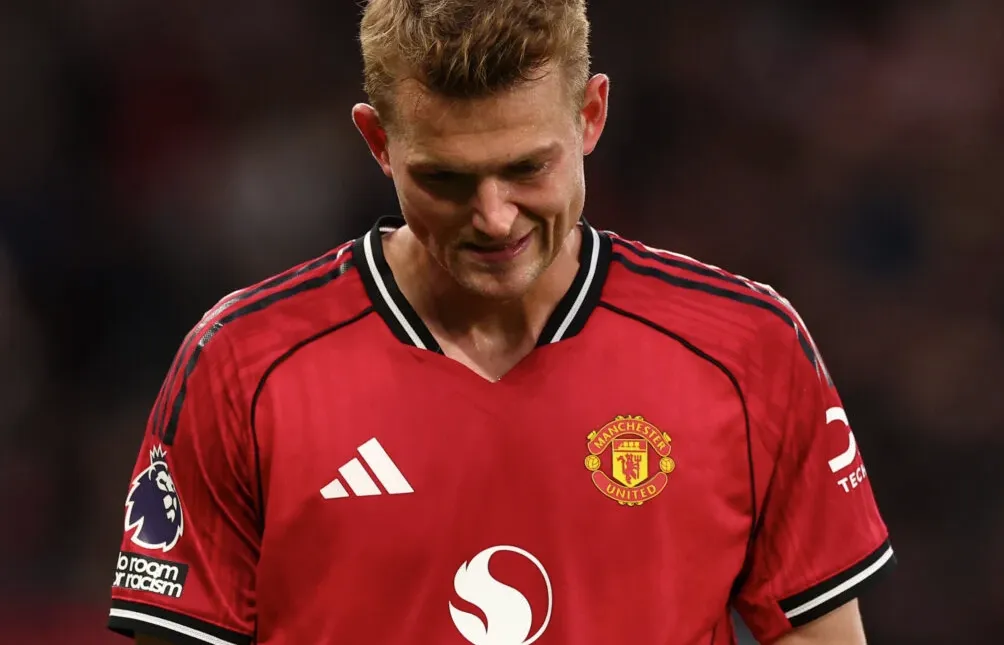
The football world has been buzzing with intense debate following Manchester United‘s latest disappointing performance, but the conversation is taking a troubling turn. While many analysts and pundits are quick to single out Matthijs de Ligt as the primary scapegoat for the Red Devils’ defensive struggles, a deeper examination reveals a much more complex and systemic problem at Old Trafford. The truth is far more uncomfortable for fans and managers alike.
The Glaring Stats That Tell a Different Story
When you look at the raw numbers from Manchester United’s recent matches, the narrative becomes muddled. De Ligt, who arrived at Old Trafford with an impressive pedigree from Ajax, Juventus, and Bayern Munich, has been caught out of position on several occasions, leading to crucial goals conceded. However, the stats don’t tell the whole story.
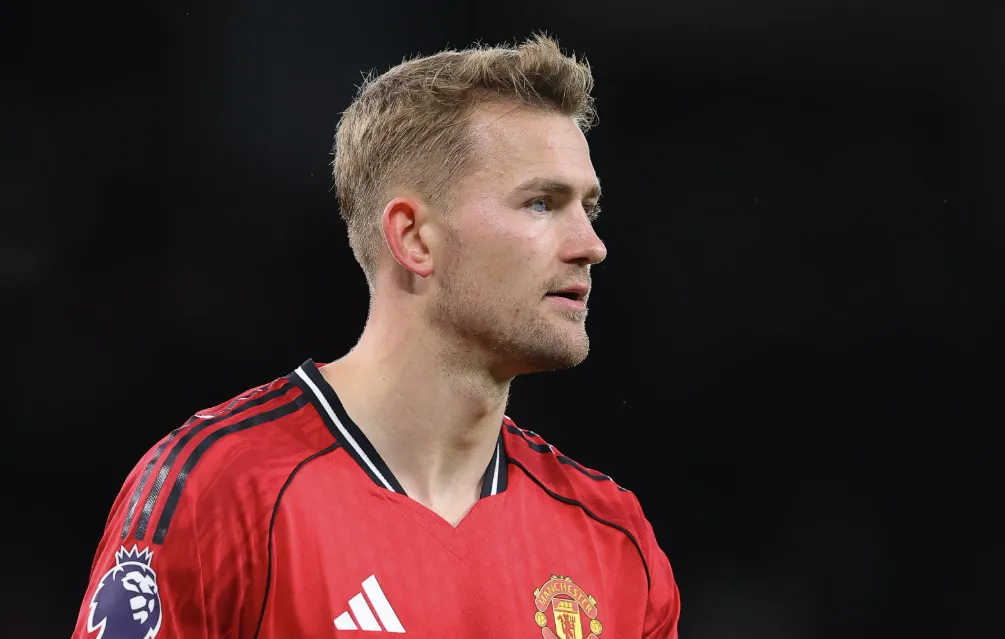
According to data analysts, Manchester United have conceded an alarming 22 goals in their last 13 Premier League matches as of early 2025. While De Ligt has been involved in six of those goals, his teammates have been equally culpable. The defensive unit, as a whole, has been leaking chances at an alarming rate, with the team allowing an average of 2.1 expected goals against per game – the worst record among the traditional “Big Six” clubs.
Why the System Is Failing, Not Just the Players
The Midfield Disconnect
One of the most glaring issues that gets overshadowed by the De Ligt criticism is the complete breakdown in midfield protection. Manchester United’s midfield, whether it’s the pairing of Casemiro and Bruno Fernandes or any other combination, has consistently failed to provide adequate cover for the backline. Opponents are waltzing through the middle third with alarming ease, forcing De Ligt to make impossible split-second decisions.
Football analyst James Richardson from Sky Sports noted, “The problem isn’t that De Ligt can’t defend – it’s that he’s constantly being asked to defend in transitions where he has no midfield support. This is a tactical failure, not an individual one.”
The Pressing Conundrum
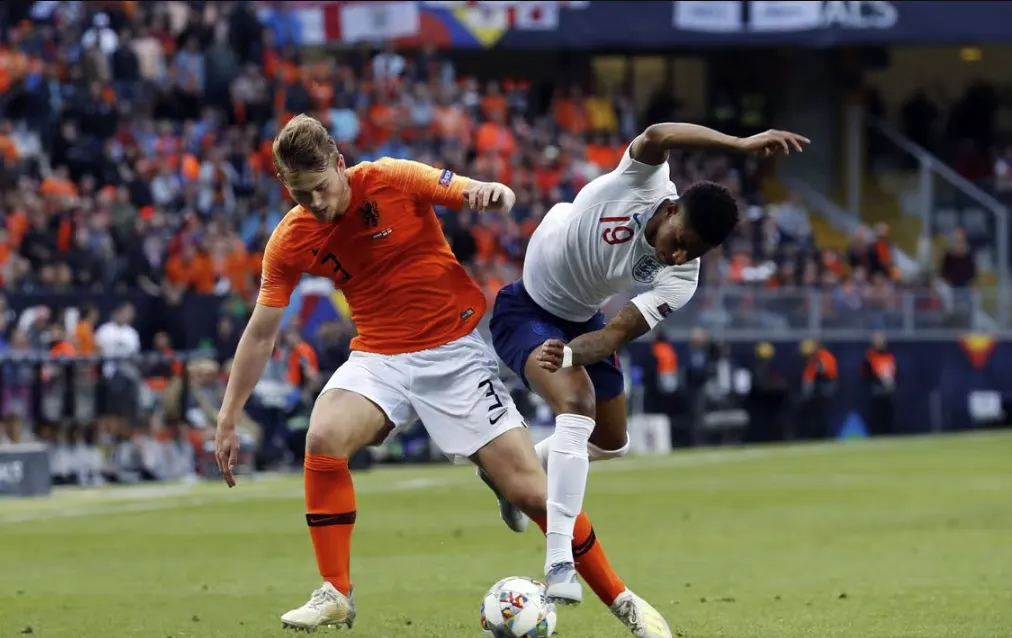
The much-talked-about system that manager Erik ten Hag has tried to implement – or has it changed? – remains inconsistent. Manchester United‘s pressing structure is disjointed, with some players pressing high while others drop deep, leaving gaping holes in the defensive line. De Ligt often finds himself torn between stepping up to close down attackers and dropping back to cover space, creating confusion that leads to goals.
Full-Back Vulnerabilities
Let’s not forget the defensive responsibilities of the full-backs. Both Diogo Dalot and Luke Shaw (when fit) have been exposed repeatedly, leaving De Ligt and his defensive partners to cover for them. When attacking transitions break down, the full-backs are often caught upfield, creating 2v1 situations that no center-back can handle alone.
The Individual Errors of Other Players
While De Ligt has made mistakes, including a costly misjudgment against Arsenal where he failed to track Gabriel Jesus’s run, he is far from the only culprit.
Casemiro’s Decline
The Brazilian midfielder, once the best in the world at his position, has seen a dramatic decline in form. His positional awareness has waned, and his lack of pace forces De Ligt to cover an excessive amount of space. In the 3-1 loss to Aston Villa, Casemiro was beaten three times in the build-up to the opening goal, leaving De Ligt exposed.
The Goalkeeper Situation
Andre Onana has been inconsistent since joining the club. While his shot-stopping has shown glimpses of quality, his decision-making on crosses and through balls has put extra pressure on the defenders. A goalkeeper who doesn’t command his area can make any center-back look worse.
Victor Lindelöf’s Inconsistency
When Ten Hag has tried to rotate the defense, Lindelöf has not provided the stability needed. His tendency to drop too deep or commit to challenges rashly has left De Ligt in no-win situations multiple times this season.
A Historical Perspective: Comparing with Past Generations
If we look at Manchester United‘s great defensive partnerships – Bruce and Pallister, Ferdinand and Vidic, even the partnership of Blind and Smalling – they all had one thing in common: a coherent system. Sir Alex Ferguson’s teams had a clear defensive structure where every player knew their role.
Compare that to the current setup: players are still learning the system well into the season. The frequent changes in personnel due to injuries (with Lisandro Martínez missing significant time) have prevented any defensive chemistry from developing.
The Manager’s Responsibility
Erik ten Hag must shoulder significant responsibility. His insistence on playing a high line despite the defensive unit’s lack of pace has been suicidal at times. The decision to bypass experienced defensive coaches or perhaps the lack of adaptation to the Premier League’s unique demands are also under scrutiny.
Insiders have suggested that the dressing room is not fully convinced by the tactical instructions, with some players questioning the defensive shape during matches. This lack of belief in the system is a fundamental problem that no individual player can solve on their own.
De Ligt’s Response and Character
To his credit, Matthijs de Ligt has not shied away from criticism. In post-match interviews, he has consistently accepted responsibility while also hinting at deeper issues. “We need to do better as a team,” he said after the 2-0 loss to Tottenham. “I know I can improve, but the whole team needs to be more compact, more organized.”
His experience at Bayern Munich last season, where he was also criticized before being dropped, shows that he has the mental strength to bounce back. At 25, he still has his best years ahead of him, but he needs a system that maximizes his strengths – aggression, reading of the game, and aerial dominance.
What Needs to Change
Tactical Adjustments
First and foremost, the coaching staff needs to reassess the defensive structure. Dropping the defensive line deeper, especially against pacey opponents, would relieve pressure on De Ligt and his partners. The midfield must take more defensive responsibility, particularly in screening the backline.
Personnel Usage
Perhaps it’s time to give more minutes to the younger defenders like Willy Kambwala or to change the defensive partnership to one that has more natural chemistry. Playing a consistent back four, week in and week out, would build the understanding that is currently missing.
The January Transfer Window
While the January transfer window has passed, the club must plan for the summer. A defensive midfielder who can protect the back four, along with a left-back who offers both attacking threat and defensive solidity, could transform this defensive unit. The rumored interest in players like João Palhinha or Edmond Tapsoba makes tactical sense for the Jaya9 brand that Manchester United hopes to build.
The Bigger Picture: Beyond De Ligt
The obsession with blaming De Ligt conveniently ignores the failures of the recruitment team, the coaching staff, and the club’s overall strategy. Since Sir Alex Ferguson retired, Manchester United have signed multiple center-backs – from Harry Maguire to Raphaël Varane to De Ligt – yet the defensive issues persist. This points to a systemic problem that goes far beyond any individual player.
Conclusion: Manchester United’s Collective Responsibility
Forget Amorim System, Man Utd Players Get The Blame – De Ligt’s Scapegoat Status highlights a dangerous trend in modern football analysis. While De Ligt has made mistakes, singling him out as the main problem is both unfair and misleading. The defensive struggles at Old Trafford are a collective failure – from the coaching staff’s tactical approach to the midfield’s lack of protection, from the full-backs’ positional discipline to the goalkeeper’s communication.
Manchester United fans know that their beloved club is built on a tradition of strong defensive units. The solution lies not in finding a single scapegoat but in building a cohesive system where every player understands their role. De Ligt can be part of that solution, but only if the club addresses the fundamental issues that plague the entire defensive structure.
What are your thoughts on Manchester United’s defensive crisis? Is De Ligt being unfairly blamed, or are the criticisms justified? Share your comments below and join the discussion. For more tactical analysis and breaking football news, keep following Jaya9 for the most comprehensive coverage of the beautiful game.
