
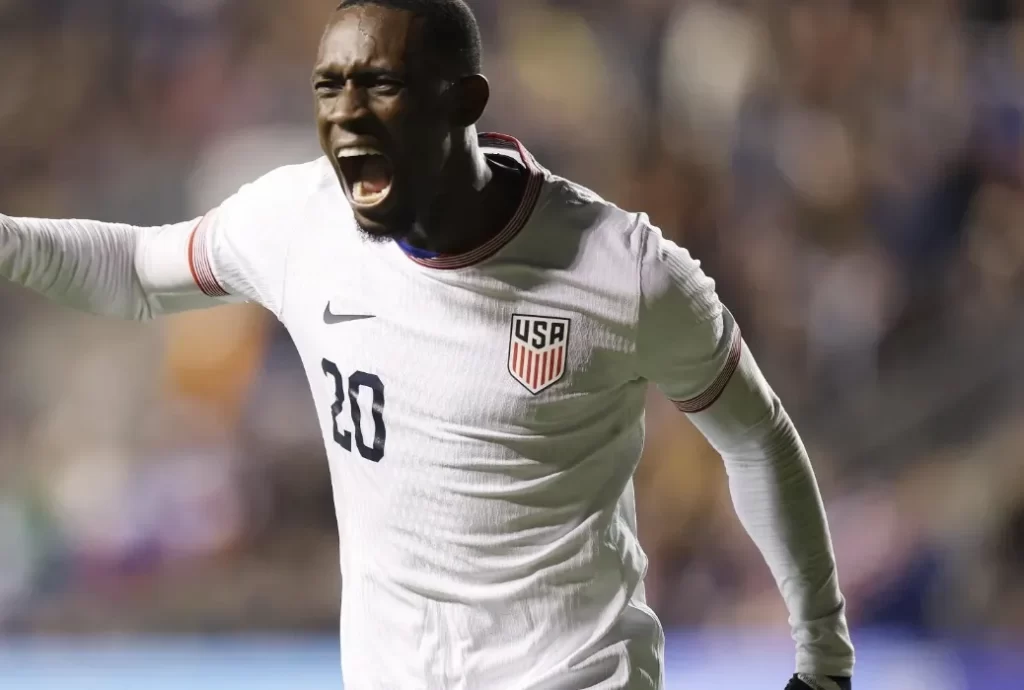
The search for a reliable starting striker for the U.S. men’s national team has been one of the most persistent challenges in American soccer over the past decade. Since the days when Jozy Altidore and Clint Dempsey anchored the frontline during the 2014 World Cup, the No. 9 position has been a revolving door of talent, potential, and unfulfilled promise. As the 2026 FIFA World Cup draws nearer, Mauricio Pochettino faces the critical task of identifying which forward can consistently deliver on the biggest stage. With the October international window featuring friendlies against Ecuador and Australia, the competition for the starting striker role has never been more intense.
The 2022 World Cup cycle highlighted the struggles perfectly. Jesus Ferreira, Jordan Pefok, Ricardo Pepi, Josh Sargent, and Gyasi Zardes all received opportunities during qualifying, yet none could cement their place. At the tournament in Qatar, an injury to Sargent and inconsistent performances from Ferreira and Haji Wright left the U.S. lacking firepower when it mattered most. Now, with the 2026 World Cup on home soil, the stakes are even higher, and Pochettino must solve this puzzle quickly.
Folarin Balogun: The Frontrunner with Question Marks
When Folarin Balogun committed to the USMNT in May 2023, choosing the United States over England and Nigeria, many believed he was the long-term answer at striker. The 24-year-old AS Monaco forward initially delivered on that promise, scoring in the 2023 Concacaf Nations League final against Canada and earning praise during the 2024 Copa America. However, injuries—including a recurring shoulder issue that required surgery in December 2024—have prevented him from fully securing the position.
Balogun’s mobility allows him to get behind defenses, creating space for playmakers like Christian Pulisic and Timothy Weah. His performance against Japan in September showcased his full skill set, including the ability to hold up play with his back to goal. Even in the loss to South Korea, the attack looked more dynamic once he entered as a substitute. Yet, doubts remain about his durability and consistent playing time at Monaco, where competition for places is fierce. This season, he has managed just one goal and one assist in 332 league minutes.
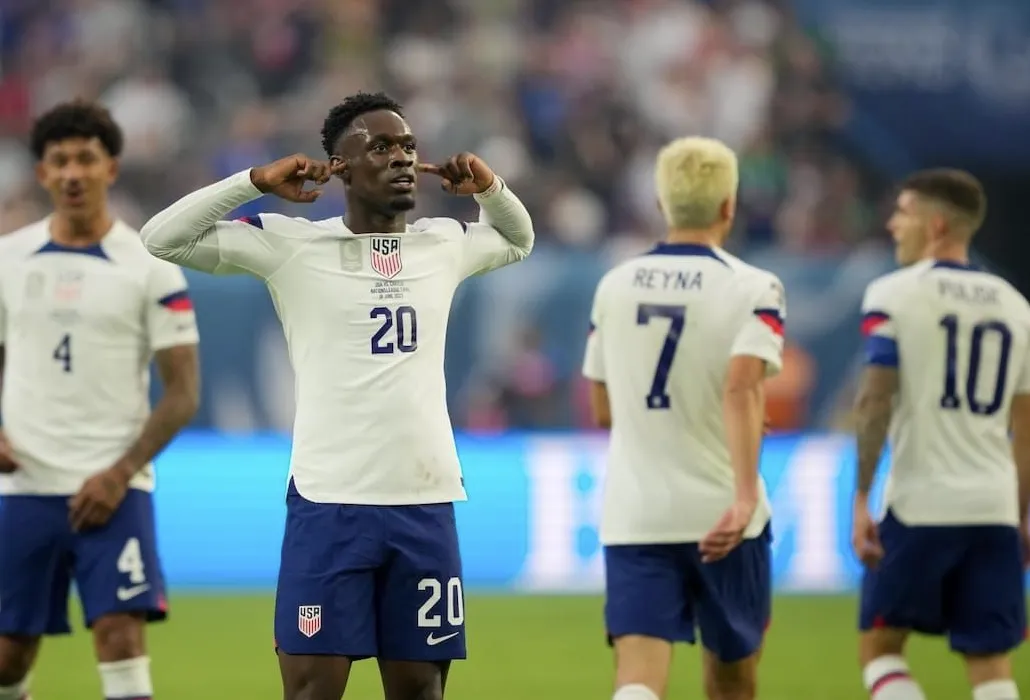
According to statistical analysis, Balogun shares similarities with Chelsea’s Nicolas Jackson. Both are willing runners and ball carriers with solid shot creation, but both struggle with finishing. Balogun averages 0.50 goals from 3.69 shots per 90 minutes over the past three years, yet those goals come from shots worth 0.70 xG per 90, indicating inefficiency in front of goal.
Haji Wright: The Form Player with World Cup Experience
Haji Wright stands out as the only U.S. center forward with a World Cup goal to his name, even if his tally against the Netherlands in 2022 came with a touch of fortune. At 27, the Coventry City striker is enjoying blistering form in the English Championship, where his eight goals lead the league and have propelled his team to the top of the table.
Wright’s versatility is a key asset. Standing at 6-foot-3, he is a force in the air but possesses enough pace to play on the wing. His ability to sniff out chances was evident in last weekend’s 5-0 demolition of Sheffield Wednesday, where he scored from less than two yards out. However, his slow reactions during the 2022 World Cup remain a concern. While that was almost three years ago, such moments stick in the memory until he delivers on a bigger stage.

Statistical comparisons link Wright to Randal Kolo Muani of PSG. While Wright isn’t the passer Kolo Muani is, he scores effectively—0.56 goals per 90 minutes—and pushes the ball forward aggressively. With 6.1 progressive carries per 90 minutes over the past three years, he draws 1.42 fouls per 90, creating a rare profile that makes him a valuable option.
Patrick Agyemang: The Physical Wildcard
Patrick Agyemang offers a different profile compared to Balogun and Wright, one built on physical presence and aerial ability. At 6-foot-4, the Derby County forward demonstrated his strengths in a recent 1-1 draw against Southampton, towering over a defender to head home the equalizer.
Agyemang is still a raw talent, occasionally struggling with his touch and hold-up play. However, he appears perfectly suited to scoring ugly goals late in matches when needed. His passing has also earned him two assists in 307 minutes of Championship football this season. With Pochettino’s roster decisions coming down to health and numbers, Agyemang’s “different profile” could secure his spot if the manager opts for four forwards.
Statistical analysis compares him to Olivier Giroud. Agyemang excels in the air with a 47.5% aerial success rate and draws significant contact, suffering 2.05 fouls per 90 minutes. His finishing is quality—0.51 goals from shots worth 0.40 xG per 90—with 90% of his attempts coming from inside the box. However, his shooting totals remain modest, and he isn’t heavily involved elsewhere on the pitch.
Ricardo Pepi: The Talent Hampered by Injuries
Three years ago, Ricardo Pepi was the odd man out when the USMNT roster for Qatar was announced, a decision that proved costly when the U.S. started Jesus Ferreira against the Netherlands. Now, the 22-year-old PSV Eindhoven forward aims to secure his place on the 2026 squad—if his body cooperates.
The 2025 calendar year has been difficult for Pepi. A knee injury sustained in the Champions League against Liverpool last January required surgery, forcing him to miss the Gold Cup. His recovery has been stop-start, with a recent muscle injury sidelining him for this camp. Despite these setbacks, Pepi’s movement allows him to sniff out opportunities that others might miss, and his link-up play makes him a valuable contributor. However, time is running out for him to make a lasting impression.
Statistical comparisons point to Lautaro Martinez of Inter Milan. More than any other American forward, Pepi gets involved in all phases of play. His offensive numbers are inflated by playing in the Eredivisie, but they remain excellent: 0.74 goals and 1.36 chances created per 90 minutes. He also contributes defensively, averaging 5.53 defensive interventions per 90—outstanding for a forward.
Josh Sargent: The Conundrum of Club Form vs. International Struggles
Rarely has the gap between club and international form been as stark as it is with Josh Sargent. The 25-year-old Norwich City forward has hit double-digit goals in each of his past three full seasons in the Championship and is on pace again with five goals in nine league matches this season. Yet, he hasn’t scored for the USMNT in his past 17 appearances, dating back to November 2019.
Sargent does many things well—movement, link-up play, and finishing—but no single aspect of his game appears elite enough to be a difference-maker at a World Cup. Even with Pepi injured for this window, there was no room for Sargent among the forwards on Pochettino’s roster. While he has World Cup experience, it may not be enough to secure his spot.
Statistical analysis compares him to Moise Kean of Fiorentina. Sargent is the most statistically nondescript of the American forwards, but like Kean, he is a willing presser with 4.09 defensive interventions per 90 minutes since the start of the 2024-25 season. He is an above-average finisher, scoring 0.56 goals per 90 from shots worth 0.48 xG. However, his shot totals are lower than desired, at 2.43 per 90, and he doesn’t stand out as a passer.
The Final Verdict: Who Makes the Cut?
As the 2026 World Cup approaches, Balogun, Pepi, Wright, and Agyemang appear to be in the best position to make the squad, in that order. Four forwards might seem excessive, but each offers a unique profile that can help the USMNT in different situations. Flexibility is vital in a tournament like the World Cup, where matches can demand different approaches.
In terms of who starts, Balogun currently holds the inside track. His recent performance against Japan and overall skill set make him the most complete option. However, this situation can change quickly. Injuries, form, and the competition for places at club level will all play significant roles in the months ahead. At this stage, it seems the only way Sargent makes it back to the World Cup is if others suffer injuries or experience a significant drop in form.
For fans following the USMNT’s journey, Jaya9 provides comprehensive coverage and analysis of the team’s progress. The striker race remains one of the most compelling storylines in American soccer, and with Pochettino at the helm, the final decisions will shape the team’s chances of success on home soil.
What are your thoughts on the USMNT striker situation? Who do you think should start at the 2026 World Cup? Share your opinions in the comments below, and don’t forget to explore more content on Jaya9 for the latest updates on the U.S. men’s national team and other major sports stories!
