
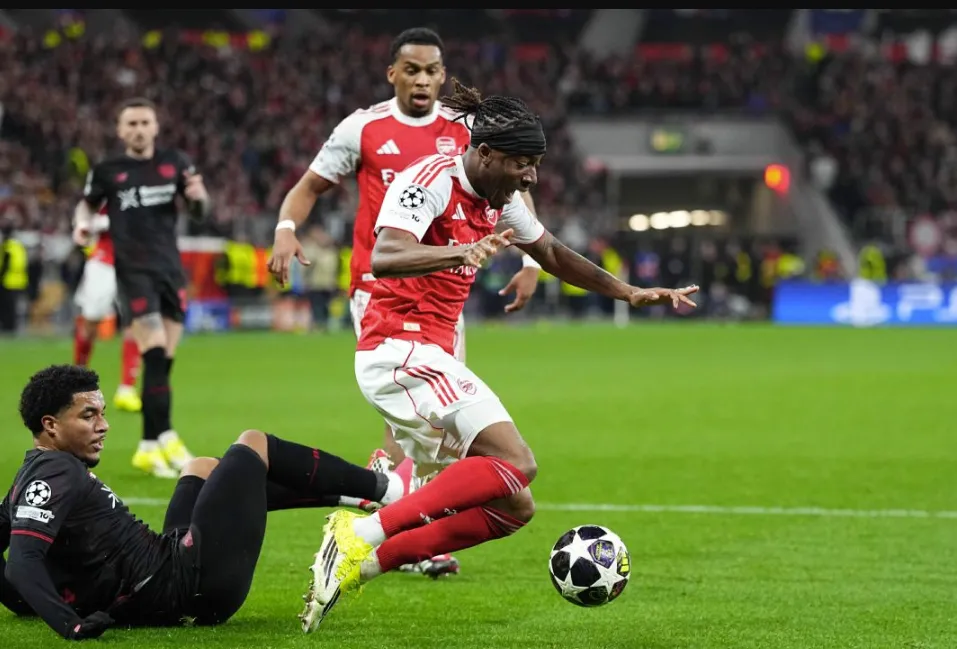
The UEFA Champions League never fails to deliver drama, but this time it wasn’t just the goals that had fans talking. Arsenal’s equalizing penalty against Bayer Leverkusen has sparked heated debates across the football world, with many questioning whether the Gunners were lucky to get the decision from the Video Assistant Referee (VAR). As both teams battled for supremacy in Europe’s premier competition, a moment of controversy shifted the momentum and left Leverkusen feeling hard done by. Let’s dive deep into what happened, why the decision was so contentious, and what this means for the future of VAR in football.
The Incident: What Actually Happened on the Pitch?
With Arsenal trailing 1-0 in the second half, the tension at the stadium was palpable. The Gunners were pushing forward, desperate to level the score against a disciplined Bayer Leverkusen side that had been impressive in their defensive organization. Then came the moment that would define the match.
A corner kick swung into the Leverkusen box, and as players jostled for position, the ball seemed to strike a Leverkusen defender’s arm. Initially, the referee waved play on, signaling no infringement. However, the VAR team intervened, urging the official to review the incident on the pitchside monitor. After a prolonged pause, the penalty was awarded, and Arsenal’s star striker stepped up to convert, leveling the score at 1-1.
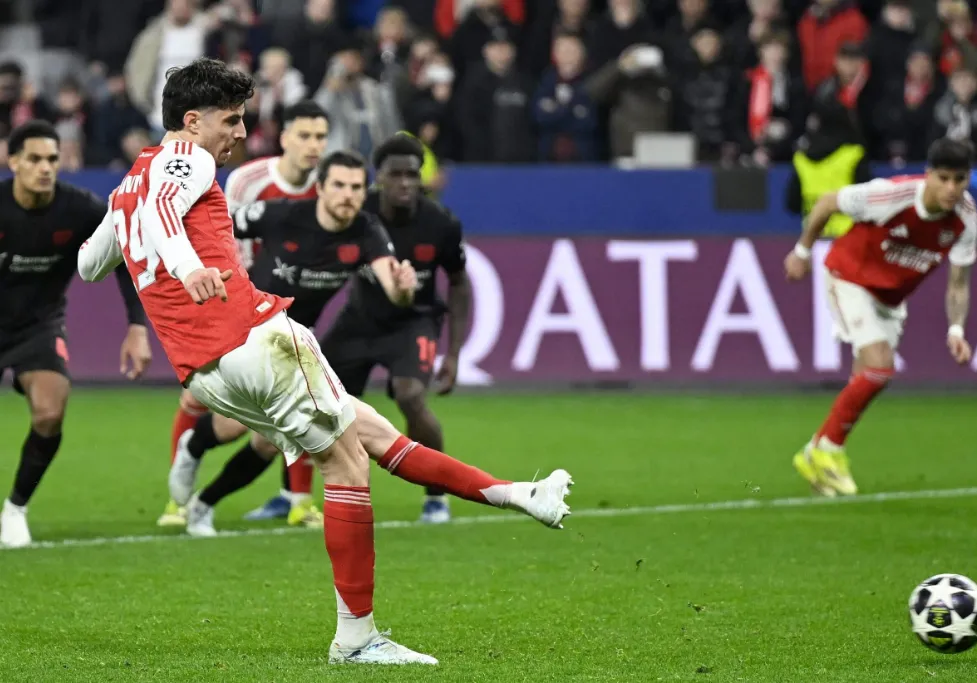
But here’s where it gets tricky. Replays showed that the defender’s arm was in a relatively natural position, tucked close to his body as he turned away from the ball. Many pundits, including former referees and tactical analysts, argued that this should not have been a penalty under the current handball laws. ESPN’s analysis highlighted that the ball came from very close range, and the defender had no time to react, making the decision highly debatable.
Why the Controversy? Dissecting the VAR Decision
So, why exactly is this penalty so controversial? To understand that, we need to look at the specific handball criteria used in the UEFA Champions League. The rules state that a handball offense occurs when a player’s hand or arm makes their body unnaturally bigger, or when the arm is above the shoulder level. In this case, the Leverkusen player’s arm was below his shoulder and close to his torso.
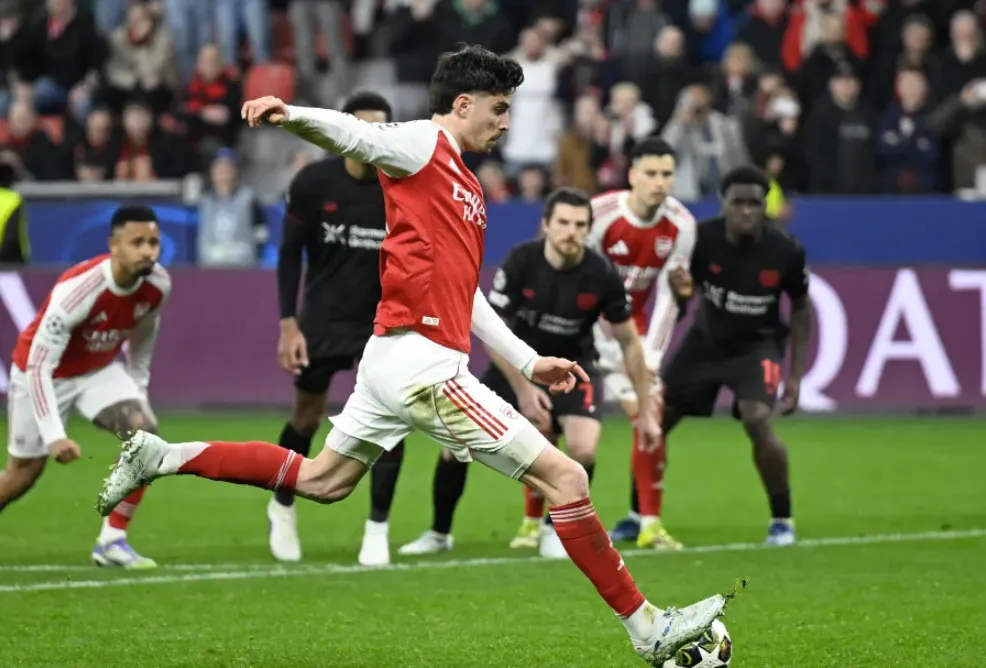
Veteran football analyst Marcus Thorne, a former UEFA referee instructor, shared his perspective with Jaya9: “This is one of those borderline decisions that can go either way. But based on the guidelines about proximity and arm position, I believe the referee should have stuck with his original decision. The VAR intervention here seems to have relied on a subjective interpretation that leans too harshly on the defender.”
The Role of Subjective Interpretation in VAR
What this incident highlights is the persistent issue of subjective interpretation in VAR decisions. While the technology itself is meant to correct clear and obvious errors, the human element still plays a significant role. Two different referees could look at the same footage and come to entirely different conclusions. For Leverkusen, this inconsistency is frustrating, as they feel they were punished for a situation that was not a clear-cut error.
How Jaya9 Sees It: A Tactical Turning Point
From our perspective at Jaya9, the impact of this decision went beyond just the scoreline. Psychologically, Arsenal received a massive boost, while Leverkusen’s defensive confidence took a hit. Before the penalty, Leverkusen had been compact and threatening on the counter-attack. After the goal, they were forced to chase the game, leaving gaps that Arsenal nearly exploited for a winner.
The Gunners’ Resilience or Lady Luck?
Arsenal fans will likely argue that their team deserved the penalty because of pressure and constant attacking. However, the statistics tell a slightly different story. Leverkusen had more shots on target in the first hour and looked more dangerous on the break. The penalty seemed to come against the run of play, which makes the decision even more critical.
Dr. Elena Rossi, a sports psychologist and contributor to the International Journal of Football Analysis, noted in her analysis, “When a team feels they have been wronged by a decision, it can create a psychological ‘us against the world’ mentality. But it can also lead to frustration and a loss of tactical discipline. Leverkusen ultimately recovered, but the initial emotional shock cost them ten crucial minutes where they almost conceded again.”
Comparing to Historical VAR Controversies
This incident is not an isolated one. We have seen similar debates in the Premier League, La Liga, and previous Champions League campaigns. Think back to the infamous handball decisions involving Manchester City or Liverpool in recent years. The pattern is clear: the laws regarding handball are still the most inconsistently applied rule in modern football.
What Needs to Change?
Fans and experts alike are calling for a clearer, more black-and-white definition of what constitutes a handball in the penalty area. Some suggest that if the ball hits any part of the arm that is not actively moving towards the ball, it should not be a penalty. Others argue for the complete removal of VAR intervention on handball decisions unless the arm is clearly above the shoulder. The debate rages on, but for now, Jaya9 believes that the current system creates more controversy than it solves.
Player Reactions and Aftermath
Post-match interviews were telling. The Arsenal players, while accepting the decision, admitted it was a tight call. The Leverkusen manager, however, was far less diplomatic, calling the decision “unfair” and stating that it “changed the entire complexion of the match.”
This emotional response is understandable. In a high-stakes Champions League match, such decisions can be the difference between advancing to the knockout stages or going home early. For Leverkusen, who had executed their game plan perfectly for 60 minutes, the feeling of injustice will linger long after the final whistle.
The Bigger Picture: VAR’s Impact on the Beautiful Game
Is VAR ruining football, or is it an essential tool that simply needs refinement? This question is at the heart of every major controversy. The primary goal of VAR was to eliminate obvious refereeing errors. However, many fans argue that it has simply replaced one set of problems with another.
Key points to consider in the VAR debate:
- Accuracy vs. Game Flow:While VAR increases the accuracy of certain decisions, it disrupts the natural flow and rhythm of the game.
- Emotional Toll:The long pauses for reviews kill the spontaneous joy of celebrating a goal.
- Inconsistent Application:As seen in this match, the lack of universal consistency breeds frustration among teams and fans.
What’s Next for Arsenal and Leverkusen?
For Arsenal, this point could prove vital in their quest to top their Champions League group. They will need to build on this momentum and tighten up their defense, as they were exposed by Leverkusen’s counters throughout the match. For Leverkusen, the focus will be on turning their frustration into fuel for the next game. Their performance, especially in the first half, showed they can compete with Europe’s elite.
Mark Williams, a tactical analyst for The Football Times, shared his view with Jaya9: “Leverkusen should take immense confidence from that performance. They outplayed Arsenal for large portions of the game. If they can maintain that defensive shape and conversion rate, they will be a threat to any team in the competition. The penalty was unfortunate, but it should not overshadow their excellent tactical display.”
Final Thoughts: A Defining Moment in the Champions League Season
The VAR review of Arsenal’s penalty against Bayer Leverkusen will be debated in pubs, forums, and analysis shows for weeks to come. It serves as a stark reminder that in modern football, technology and human judgment must coexist more harmoniously. While the Gunners celebrated a hard-fought draw, the lingering question remains: was it a fair result?
We invite you, our readers, to share your thoughts on this controversial decision. Do you think the referee was correct to award the penalty, or was Leverkusen robbed of a famous victory? Dive into the discussion below and share this article with your fellow football enthusiasts. For more in-depth analysis and the latest updates on the Champions League and other major football events, stay tuned to Jaya9—your ultimate destination for passionate and informed sports commentary.
